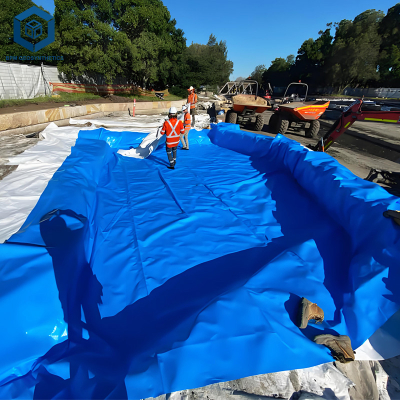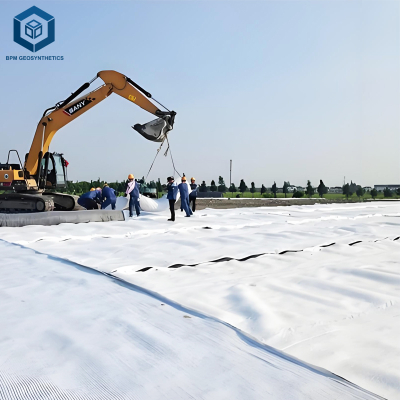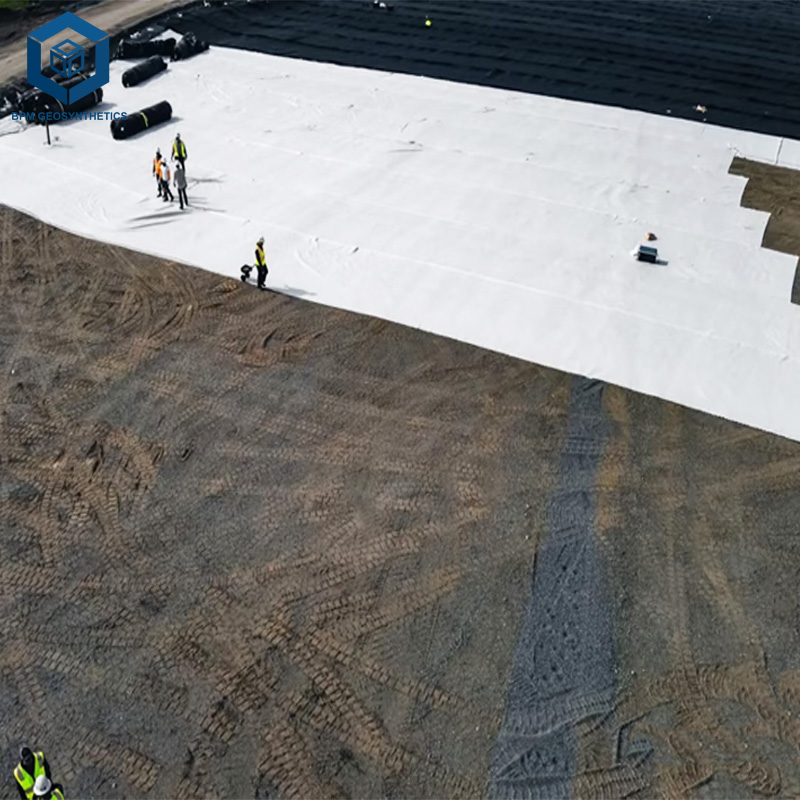
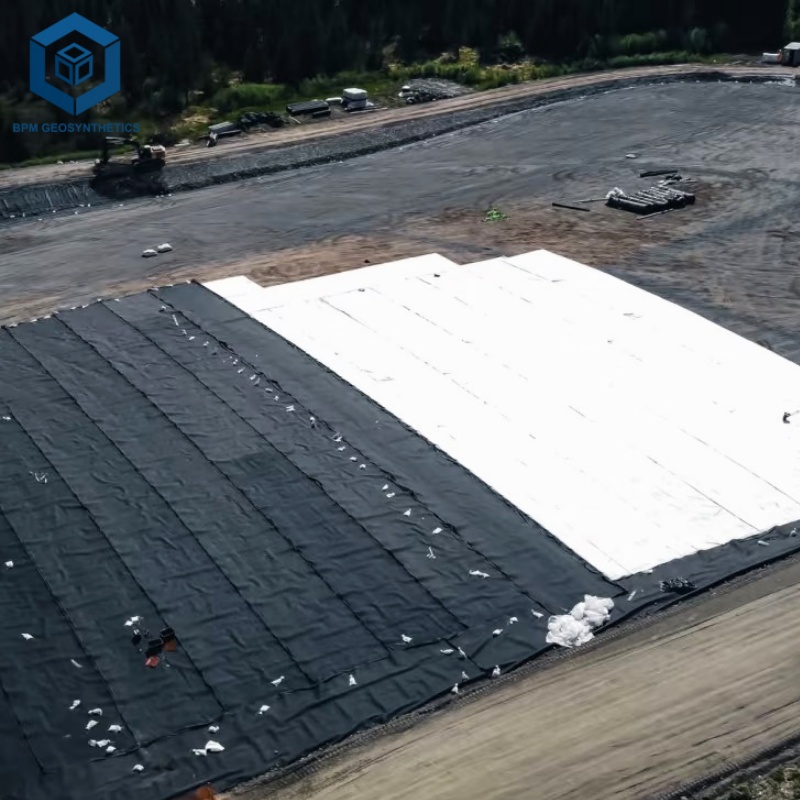
Geotextile Fabric Under Riprap
Premium geotextile fabric under riprap delivers reliable filtration, separation, and reinforcement performance for demanding civil engineering and hydraulic applications. By combining excellent permeability with strong mechanical properties, geotextile fabric helps create stable, durable, and cost-effective erosion control systems for long-term infrastructure protection.
- Prevents soil washout beneath rock layers
- Enhances structural stability of riprap systems
- Reduces maintenance and repair costs
- Improves drainage efficiency and water permeability
- Minimizes settlement and ground displacement
- Supports sustainable and environmentally friendly construction
1. Essential Role of Geotextile Fabric Under Riprap
Riprap are large stones that are often installed along the riverbanks, shorelines, drainage channels, highways, and embankment protection projects to stabilize the soil or reduce the velocity of runoff. While stone has the capability to resist the impact of water, there are still many old style of ripraps that can break due to the soil erosion under the rocks.
As the foundation is not well-protected, water will slowly erode the soil underneath the riprap by:
- Causing the stones to settle and be displaced
- Leading to the collapse of the surface and formation of voids
- Making the slope unstable
- Resulting in further erosion problems
- Leading to costly maintenance and repairs
This explains why Geotextile Fabric Under Riprap is now regarded as a must-have part for modern erosion control systems.
Imagine the geotextile fabric as the hidden groundwork of the whole riprap system. While riprap stones shield the surface from water erosion, geotextile fabric plays the role of soil stabilization underneath and is a protective barrier against internal erosion.
Effectively, geotextile fabric provides filtration, separation, drainage, and reinforcement all in one layer, which makes it possible for riprap systems to be more stable and durable over time.
2. Introduction to Geotextile Fabric Under Riprap
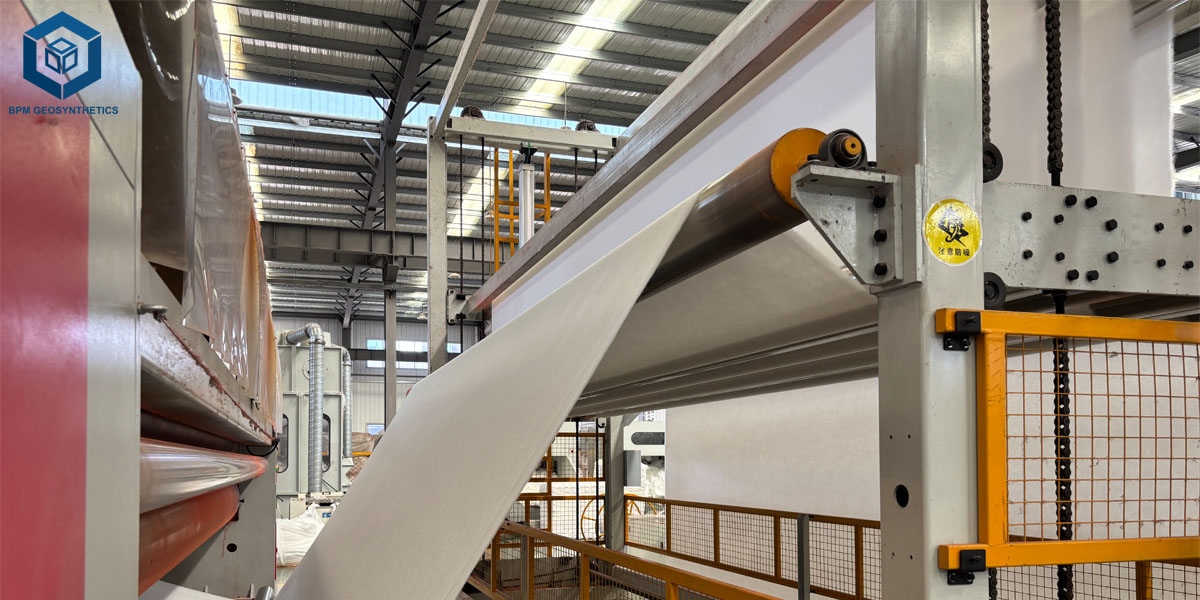
Geotextile fabric under riprap is a high-strength permeable geosynthetic material installed beneath riprap stone layers to stabilize soil and improve drainage performance.
It is commonly manufactured from:
- Polypropylene (PP)
- Polyester (PET)
The geotextile acts as a filtration barrier that allows water to pass through freely while preventing soil particles from being washed away.
In simple terms:
“The fabric lets water flow through, but keeps the soil in place.”
This simple but highly effective function helps maintain slope stability and prevents structural failure in hydraulic and civil engineering projects.
3. Reasons for the Failure of Traditional Riprap Slope Protection Systems
There are a lot of times that erosion control systems fail not because of the riprap stones that are too small or weak, but because the soil underneath is not well protected. If there is no proper layer of filtration and separation, the structure will get weakened gradually from below by water until it fails and needs expensive repairs.
3.1 Issues That Usually Arise in the Absence of Geotextile Fabric Under Riprap
3.1.1 Soil Erosion Beneath the Stones
If the water is flowing fast it may be able to pass through the spaces between riprap stones and will erode soil particles beneath the surface. This erosive process will create internal tunnels or holes that may be hard to detect and will undermine the entire slope structure.
When there is a loss of soil, the layer of rocks that is meant to be protecting the surface will lose its support which will make the structure vulnerable to deformation or failure.
3.1.2 Riprap Settlement and Displacement
With the removal of soil by the flow of water, the riprap stones will undergo sinking, shifting, or becoming uneven. The ran-scapement will then be less effective at protecting against erosion and areas of the slope surface will be made unstable.
In extreme situations, the displaced stones can even result in the newly exposed bare soil’s direct contact with the flowing water which will speed up the erosion damage.
3.1.3 Slope Collapse and Structural Instability
Poor soil conditions under the riprap layer can lead to the collapse of large portions of a slope or embankment. The structural integrity of the soil is weakened further by water penetration especially during rainfall if it is coupled with flooding and strong wave action.
For riverbanks, highways, dams, and coastal protection systems, the risk is high as the failure of a slope can threaten nearby infrastructure and public safety.
3.1.4 Poor Drainage Performance
Systems without geo textile fabric typically experience troubles in subsurface drainage. This can lead to the buildup of water underneath the surface which generates hydrostatic pressure. Hydrostatic pressure weakens the soil and leads to increased instability risks.
Moreover, a rise in water pressure may trigger faster soil migration and erosion leading to a drop in the dependability and protective capacity of the system.
3.1.5 Frequent Maintenance and Repair Costs
The lack of proper soil stabilization and filtration results in traditional hardened protection systems needing repeated maintenance after storm, flooding, or continuous water contact.
3.2 Common repair issues include:
- Replacing displaced stones
- Repairing collapsed slope sections
- Filling erosion voids
- Restoring damaged drainage areas
These ongoing repairs significantly increase long-term project costs and maintenance workloads.
3.3 Common Application Areas Affected by Riprap Failure
These problems frequently occur in critical infrastructure and hydraulic engineering projects, including:
- Riverbank stabilization projects
- Coastal and shoreline protection systems
- Highway and railway embankments
- Drainage channels and canals
- Reservoir and dam protection works
- Stormwater management systems
A properly installed geotextile under riprap layer helps solve these problems at the source by improving filtration, drainage, soil retention, and overall structural stability.
4. Core Advantages of Geotextile Fabric Under Riprap
4.1 Excellent Filtration Performance
Filtration is one of the most important functions of filter fabric under riprap under riprap.
The geotextile fabric under riprap allows water to flow naturally through the system while retaining soil particles beneath the surface.
Benefits include:
- Prevents soil washout
- Maintains slope integrity
- Improves drainage efficiency
- Reduces long-term erosion risks
This balance between permeability and soil retention is essential for effective erosion control applications.
4.2 High Tensile Strength and Puncture Resistance
Riprap stones can place enormous pressure on the underlying material. High-quality non woven geotextile fabric is specifically engineered to withstand heavy loads and sharp stone edges.
Advantages include:
- Excellent puncture resistance
- High tensile strength
- Strong load distribution capability
- Reduced risk of tearing during installation
Compared with low-quality lightweight geo fabric, heavy-duty geotextiles provide much better long-term reliability for demanding engineering environments.
4.3 Superior Drainage Capacity
Efficient drainage is critical for maintaining slope stability.
Geotextile fabric helps channel water away from the structure while reducing hydrostatic pressure beneath the riprap layer.
Key benefits:
- Fast water permeability
- Prevents water accumulation
- Reduces slope pressure
- Enhances structural stability
Simply put:
“The better the drainage, the stronger and more stable the slope becomes.”
4.4 Long Service Life and Weather Resistance
Premium geotextile drainage fabric is designed to perform in harsh environmental conditions for decades.
Key durability features include:
- UV resistance
- Chemical resistance
- Acid and alkali resistance
- Corrosion resistance
- Freeze-thaw stability
- Resistance to mold and biological degradation
These properties make geofabric ideal for:
- Coastal projects
- High-humidity environments
- Cold climate regions
- High-temperature areas
4.5 Reduced Maintenance and Lifecycle Costs
One of the biggest advantages of using nonwoven geotextile fabric under riprap is the reduction in long-term maintenance expenses.
Benefits include:
- Fewer repairs
- Reduced slope failures
- Longer project lifespan
- Lower replacement costs
- Improved overall project reliability
Investing in high-quality non woven geotextile during construction can save significant costs over the life of the project.
5. Main Applications of Geotextile Fabric Under Riprap
5.1 Riverbank Protection
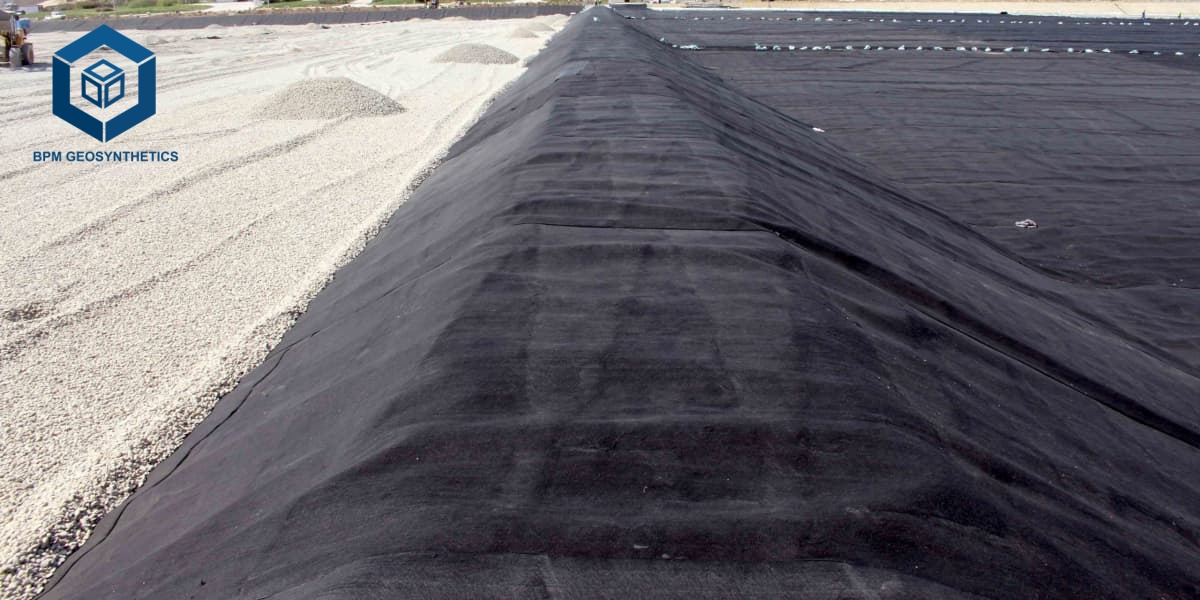
Geotextile filter fabric beneath riprap has become the preferred method in riverbank erosion control due to its capability of anchoring soil particles from fast-moving water and floods. The non woven filter fabric ensures that riverbanks stay intact since it bars soil particles that are light and prone to washing away while it naturally permits water to flow out.
Such an application is used practically in rivers, canals, drainage waterways, and flood control systems.
5.2 Coastal and Shoreline Protection
Non woven geotextile drainage fabric is looked upon as a very important part of coastal engineering projects to provide an efficient filtration as well as a stable base for riprap stones. The fabric layer goes a long way in protecting shorelines against damage from the impact of waves, erosion caused by tides, and water movement that weakening coastal structures over time.
This technique has become very much a part of the construction of seawalls, ports, harbors, lakeshores, and marine erosion protection projects where the durability aspect is always a key concern.
5.3 Highway and Railway Embankments
Geo textile material is often placed under riprap next to highways and railway embankments in order to fortify the slopes and cut down on loose soil erosion which happens due to heavy rainfall and surface runoff. The fabric not only will enhance the soil's firmness but also create a barrier against washout which is the main risk for transportation infrastructure.
The implementation of this measure could be regarded as a strong point to increase the life span of roads, bridges, railways, and retaining slopes even in tough environments.
5.4 Drainage Channels and Ditches
Water flowing through drainage channels and roadside ditches can become a very powerful agent of soil displacement and channel deterioration. When non woven geotextile filter fabric is placed under riprap it not only increases the speed and direction of the water but also helps to keep the channel stable.
Acting as a filter, the geotextile shell prevents the soil from moving along with the water and thus helps in keeping the drainage system in good working condition for a longer period of time.
5.5 Reservoirs and Dam Protection
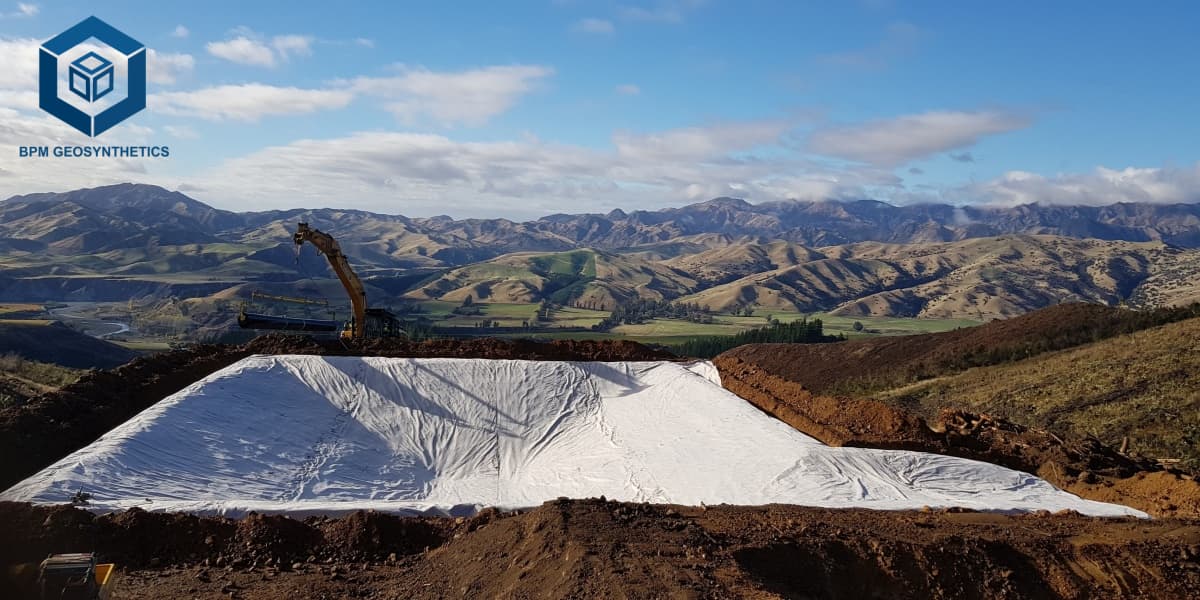
Geotextile fabric underneath riprap is an important component of dam, reservoir, and hydraulic engineering projects since it serves as the means for comprehensive erosion control and structural support over time. The geotextile drainage is effective in last ditch efforts to prevent soil erosion under layers of protective rock in cases where water level changes frequently and in instances of high hydraulic pressures.
It is a way of greatly benefiting the overall safety, hardness for wear and tear together with good maintenance qualities of essential water supply systems.
6. Choose the Right Geotextile Fabric Under Riprap
It is crucial to select the right geotextile fabric in order to ensure proper performance, slope stability, and efficient erosion control for a long period. Besides riprap stone size, conditions of water, type of soil as well as project needs must be taken into account when the right material is being chosen.
6.1 Fabric Weight (GSM)
One of the most vital considerations when picking a geotextile stabilization fabric for riprap is material density or fabric weight, often expressed in grams per square meter (GSM).
Standard picks are:
- 200gsm
- 300gsm
- 400gsm
- 600gsm
Heavier driveway stabilization fabric generally provide better strength, puncture resistance, and durability for demanding environments.
As a general rule:
“The larger the riprap stones, the heavier and stronger the geotextile should be.”
For projects exposed to strong water flow or large rock placement, higher GSM fabrics are usually recommended for improved long-term stability.
6.2 Tensile Strength
Tensile strength determines the non woven needle punched geotextile’s ability to withstand pulling forces and heavy loads without tearing or deforming.
High tensile strength geotextile fabric is especially important for:
- Heavy riprap installations
- Steep slope protection
- Riverbank stabilization
- Coastal engineering projects
- High-flow hydraulic environments
A stronger best non woven geotextile fabric helps distribute loads more evenly and improves the structural reliability of the entire protection system.
6.3 Puncture Resistance
Riprap stones often have sharp edges that can damage weak geotextile materials during installation or under long-term pressure.
High puncture resistance helps:
- Prevent tearing during stone placement
- Protect the filtration layer beneath the riprap
- Extend the service life of the system
- Reduce maintenance and repair risks
For heavy-duty projects, thick non woven geotextile fabrics are commonly preferred because they provide excellent cushioning and impact resistance.
6.4 Permeability
Permeability refers to the fabric’s ability to allow water to pass through while retaining soil particles.
A properly balanced geotextile should provide:
- Efficient water drainage
- Reliable soil filtration
- Reduced hydrostatic pressure
- Prevention of soil migration
If permeability is too low, water may accumulate beneath the riprap layer. If it is too high, fine soil particles may wash away. Therefore, selecting the correct permeability level is critical for maintaining long-term erosion control performance.
7. Installation Process of Geotextile Fabric Under Riprap
Correct installation is just as important as choosing high-quality materials.
Step 1 – Site Preparation
Clear debris, vegetation, and unstable soil from the installation area.
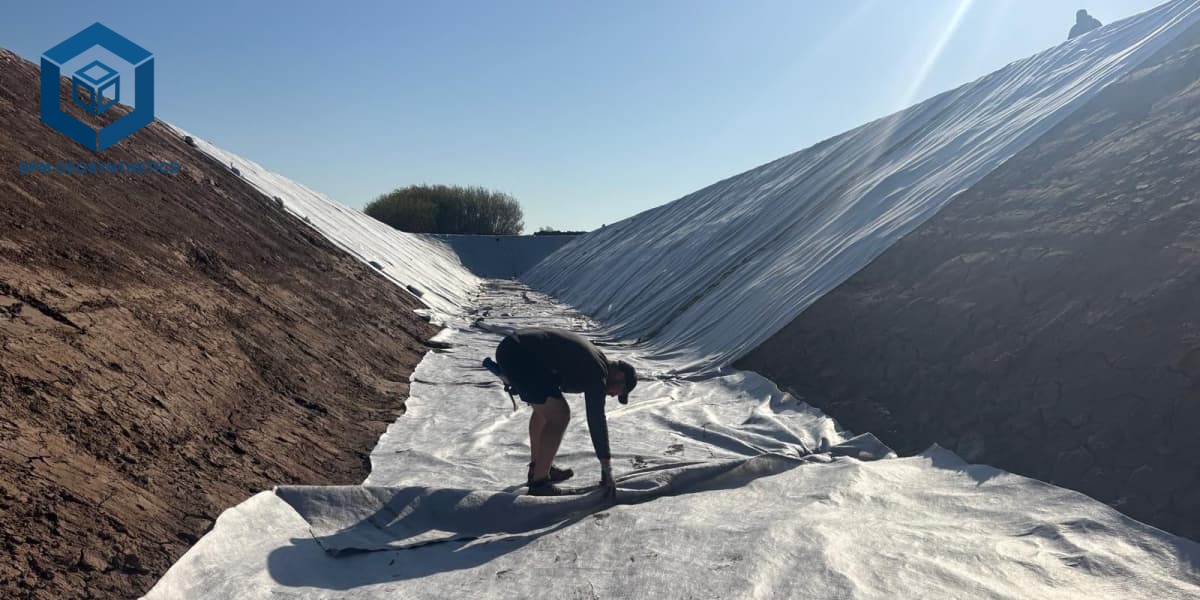
Step 2 – Lay the Geotextile Fabric
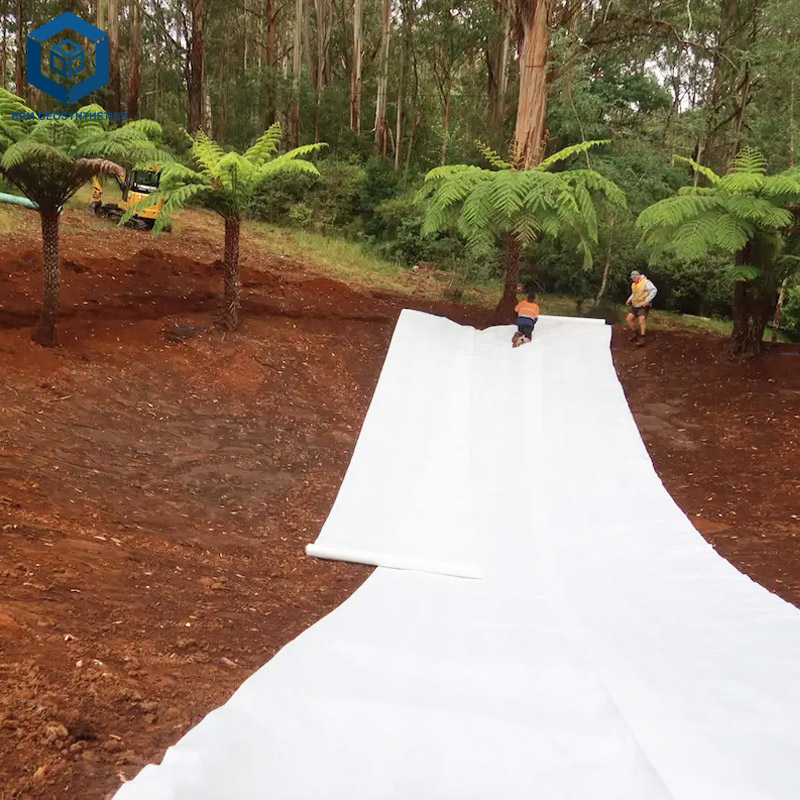
Roll out the fabric evenly across the prepared surface.
Step 3 – Overlap and Secure
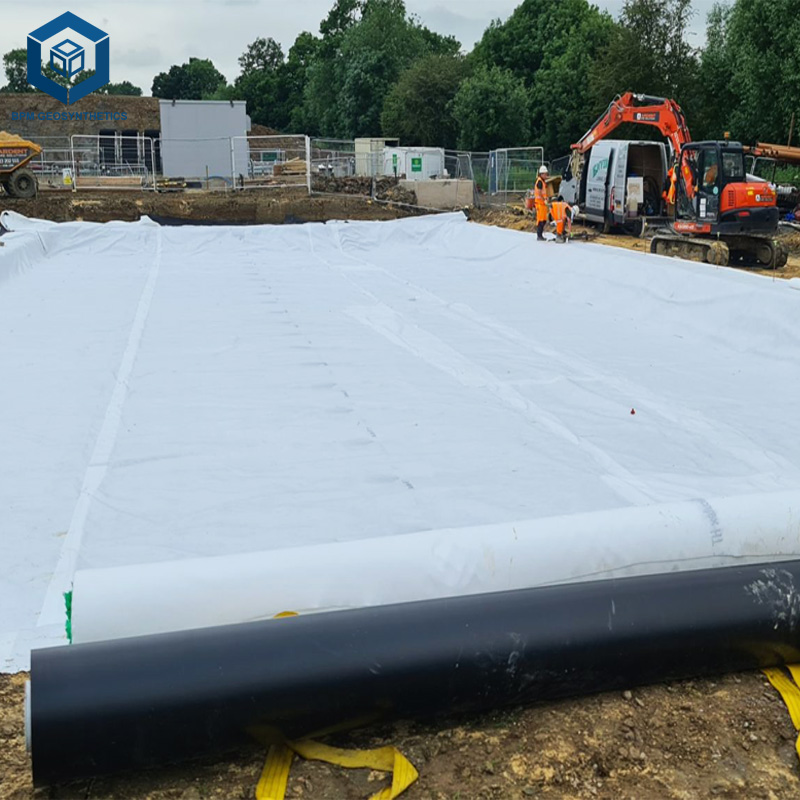
Ensure proper overlap between adjacent sheets and secure them to prevent movement.
Step 4 – Place Riprap Stones
Carefully install riprap stones without damaging the fabric layer.
Step 5 – Final Inspection
Check for proper coverage, stability, and drainage conditions.
Professional installation ensures maximum long-term performance.
8. FAQ About Geotextile Fabric Under Riprap
Q1: Why is geotextile fabric installed under riprap?
It prevents soil erosion beneath the rock layer while allowing water to pass through freely.
Q2: Should I use woven or non woven geotextile under riprap?
Non woven geotextile fabric is commonly preferred for filtration and drainage applications under riprap systems.
Q3: What fabric weight is best for riprap applications?
The required GSM depends on stone size, water flow conditions, and project requirements.
Q4: How long does geotextile fabric last?
High-quality UV-stabilized geotextile fabric can last for decades under proper installation conditions.
Q5: Can geotextile fabric be used for coastal projects?
Yes. It is widely used for shoreline stabilization, seawalls, and coastal erosion protection.
Q6: Does geotextile fabric affect drainage?
No. It improves drainage while preventing soil migration.
Conclusion
Apart from eradicating soil erosion, providing mechanical support to the soil, filtering, and draining, Geotextile Fabric Under Riprap is an outstandingly powerful weapon in the arsenal of civil engineering today. Not only does it keep the soil from being washed out under riprap systems, but it also substantially contributes to slope stability, prolongs the life of the project, and lessens the need for maintenance over the long run.
Whether we are talking about riverbanks, highways, coastal areas, drainage systems, or dams construction, a good-quality geotextile fabric will always stand the test of time even under the most demanding environments.
The Best Project Material Co., Ltd.(BPM Geosynthetics) are the supplier of your competent geotextile fabric solutions, technical assistance, and the customized project advice you may need; reach out to us today.